The framing is wrong: most smart locks ARE deadbolts
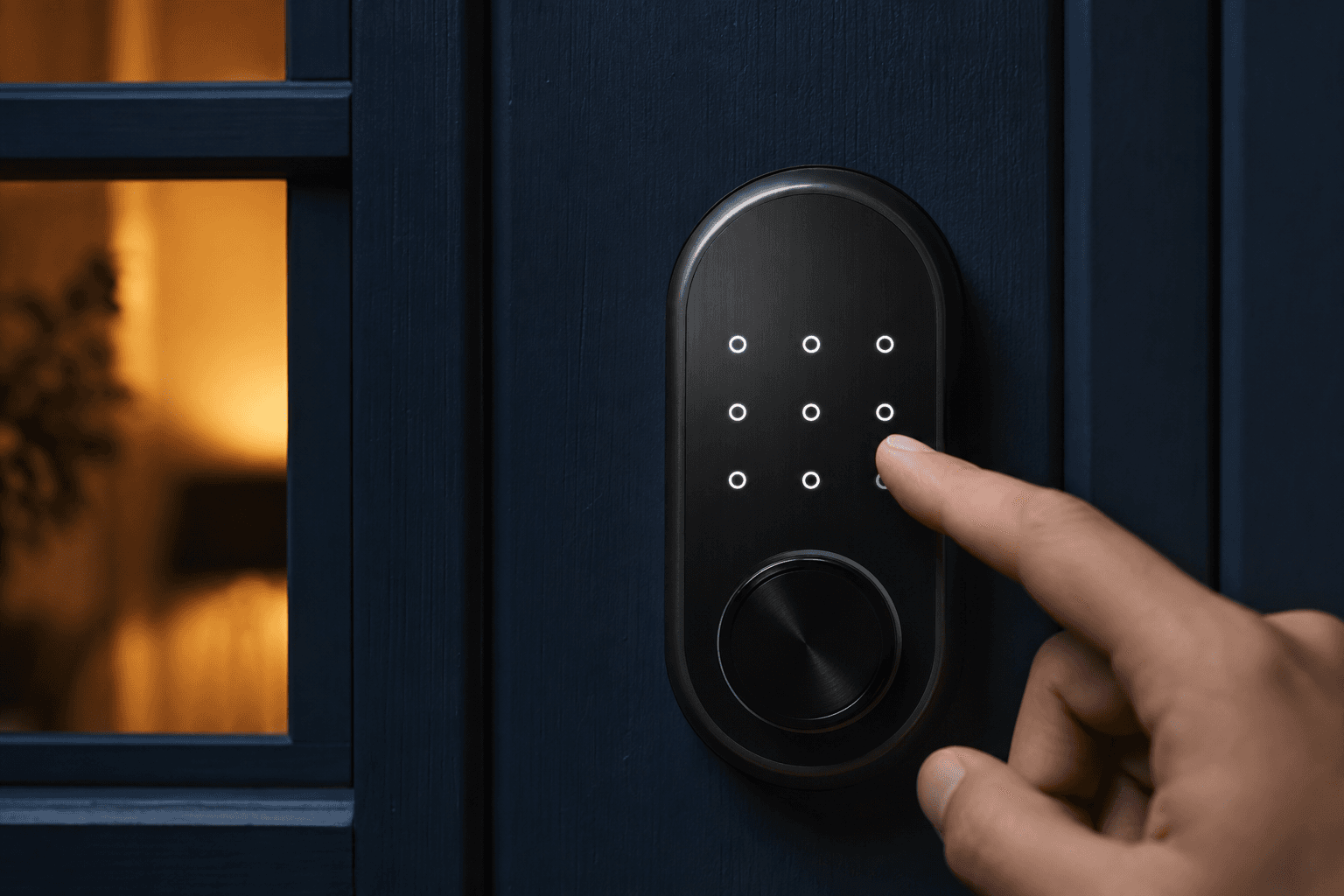
Almost every conversation about "smart lock vs deadbolt" starts from a wrong premise. The premise is that smart locks are a separate category from deadbolts. They aren't. The smart locks worth installing in 2026 — Schlage Encode Plus, Yale Assure SL, Level Bolt, August Wi-Fi Smart Lock, Kwikset Halo — are traditional Grade-2 deadbolts with a Wi-Fi/Bluetooth/Z-Wave radio bolted on. The locking mechanism inside the door is the same. The real question is: do you want a deadbolt with just a key, or a deadbolt that also has a keypad, app control, and auto-lock? That's a useful question. "Smart lock vs deadbolt" is not.
What real smart deadbolts give you
Once you have a real Grade-2 smart deadbolt installed properly, you get:
- Codes for visitors (cleaners, dog walkers, contractors, Airbnb guests) that you can revoke from your phone
- Auto-lock on a configurable timer — so the door is never accidentally left unlocked
- Activity log showing who unlocked the door and when
- Remote unlock from your phone if a neighbor needs to feed your cat
- No-key-required entry so you can stop carrying a physical key
- Notifications when the door is unlocked at unusual times
What you do NOT give up: physical-key access (every smart deadbolt worth installing has a real key cylinder as backup), or hardened bolt mechanism strength.
Where cheap smart locks ACTUALLY reduce security
The trap is cheap, sub-$100 "smart locks" that aren't deadbolts at all. Common patterns:
- Smart latch sets — replace a knob or lever, not a deadbolt. The latch is a 1/2" spring bolt. A credit card opens these. Don't put one of these on a front door.
- Smart "deadbolts" with thin metal housings — feel hollow, the keypad face is plastic, the strike plate is short screws into a doorframe. The keypad will pop off in two months and the door can be levered open with a screwdriver.
- Generic Amazon/Alibaba brands — work for a year, app gets discontinued, firmware never updated, you're stuck with a wifi-connected paperweight.
The rule: spend $180-$350 on a name-brand smart deadbolt from Schlage, Yale, Level, August, or Kwikset Halo. Below that price, you're getting a worse lock than a $40 traditional deadbolt.
When a traditional deadbolt is still the right answer
Plenty of California homes don't need a smart lock and don't want one. If any of these apply, a high-quality traditional deadbolt is the right call:
- You don't share access with anyone (no cleaners, dog walkers, Airbnb)
- You're not interested in changing batteries every 6-12 months
- You don't want one more app, account, and firmware-update cycle in your life
- The door is rarely used (basement entry, infrequent garage door)
- You want absolutely zero possibility of a bricked lock during a power outage or wifi outage
A $50-$80 Schlage B-series or Kwikset 980 deadbolt with a reinforced strike plate is a great lock. Tens of millions of homes use exactly this and it works. Don't be talked into a smart lock you don't actually need.
The hybrid setup most LA homes should use
For a typical California single-family home in 2026, the right setup is:
- Front door: Grade-2 traditional deadbolt OR Grade-2 smart deadbolt (Schlage Encode Plus, Yale Assure SL) — your call
- Garage-to-house door: smart deadbolt with keypad, so you can punch in a code coming from the car with hands full
- Side or back door: traditional deadbolt is fine
- Patio/sliding door: traditional pin lock + a foot lock; smart locks here are mostly cosmetic
Reinforced strike plates on every exterior door, regardless of lock type. The strike plate is what fails first in a kick-in attack — not the deadbolt.
The five smart deadbolts we install most often in LA & the Bay Area
In rough order of how often we install them in 2026:
- Schlage Encode Plus — best mainstream pick. Wi-Fi built in, Apple Home Key support, Grade-1 bolt mechanism, solid app, doesn't need a hub.
- Yale Assure SL Wi-Fi — sleek key-free design, very reliable, good for clients who want minimalist front-door hardware.
- Level Bolt — invisible install (the smart parts go inside the door, you keep your existing exterior hardware). Beautiful for older homes where you don't want to change the look.
- August Wi-Fi Smart Lock — retrofit-only, sits on top of your existing deadbolt's interior side. Best when you can't or don't want to replace the exterior hardware.
- Kwikset Halo Touch — fingerprint reader as primary unlock, code as backup. Best for households where kids forget codes.
We stock all five on the truck and install them daily across LA and the Bay Area. Pricing typically lands $250-$450 installed, including a reinforced strike plate.