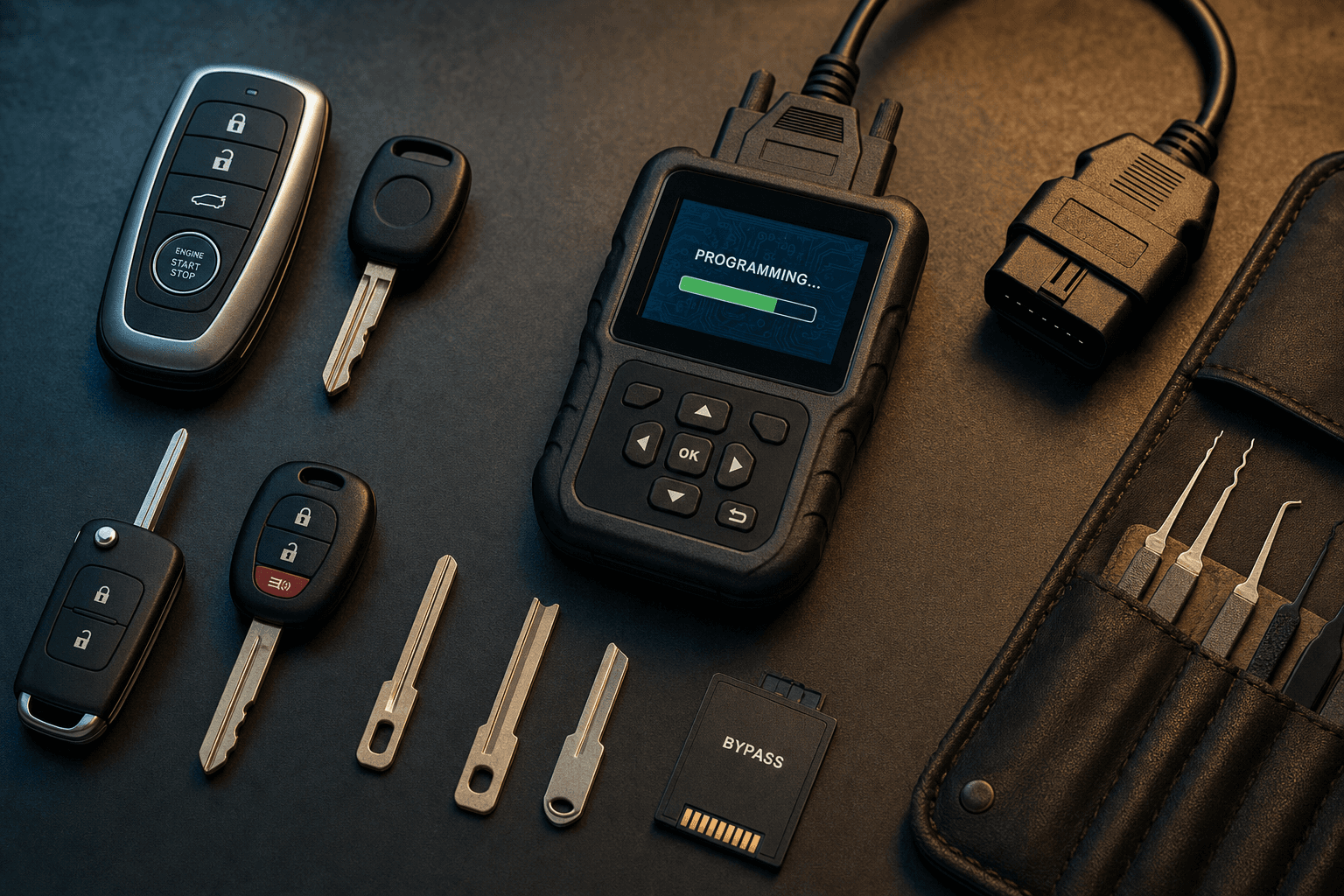
What semi-truck & fleet locksmith involves
This page explains semi-truck & fleet locksmith: what the job includes, what to have ready, honest limits and what sets the price.
Fleet and heavy-truck locksmithing is the same lockout, key, ignition and door-lock work done on private vehicles, applied to the vehicles a business runs: semi tractors, box trucks, cargo vans, pickups and pool cars. What changes is the paperwork and the scale. Every job is done on written authorization from the fleet owner or manager, keys are tracked by unit number so the fleet knows who holds what, and cylinders can be keyed alike across a group of vehicles or rekeyed when a driver leaves. Coverage is most makes and model years; we confirm each unit's year, make and model on the phone.
We dispatch across greater Los Angeles, Ventura County, Silicon Valley and the Bay Area; see the city pages for local detail. The dispatch line at (888) 492-0666 is answered around the clock.
What's included
- Cab, van and trailer lockouts at the yard, the dock or the roadside, with the unit's registration or cab card and the dispatcher's authorization confirmed first
- Key origination and spares for tractors and straight trucks, many of which still use a plain key cut from the code stamped on the door or ignition cylinder, and transponder keys for vans and pickups that have an immobilizer
- Ignition and door cylinder repair or replacement on high-mileage units with worn wafers, broken keys or theft damage
- Keyed-alike cylinder sets so one key per unit, or per vehicle group, runs the doors, the ignition, the fuel caps and the toolboxes
- Rekeying and key erasure when a driver leaves, so a key that walked off no longer opens or starts anything
- Trailer and cargo hardware: swing-door and roll-up door locks, kingpin and glad-hand locks, puck locks and hasps for van doors
- A key-control record per unit (unit number, VIN, key code, number of keys issued) for the fleet manager's file
When you need semi-truck & fleet locksmith
- Driver lost the only set of keys mid-route
- Box truck or van ignition seized at the yard
- New fleet additions need fleet-keyed cylinders
- Driver turnover means rekeying or revoking access
- Stranded fleet vehicle on the freeway shoulder
What to have ready
- Written authorization from the fleet owner or manager (an email or letter naming the units is enough), plus photo ID from whoever meets us on site
- Unit numbers, VINs and year, make and model for each vehicle, and the registration or cab card for the unit being worked on
- For a leased or financed unit, the lessor's authorization where the lease requires it
- The location and any gate, security or check-in requirement at the yard, terminal or dock; for a roadside call, the exact location and whether the truck is safely off the lane
- Whether the fleet already uses a keyed-alike code or key-control system we should match
- Whether the unit has aftermarket anti-theft, telematics immobilization or a remote starter wired in
Time on site and limits
Typically 15-45 minutes for a cab lockout or a key cut from the lock code on a tractor, and 45-120 minutes for an all-keys-lost job on a transponder-equipped van or pickup or for an ignition cylinder replacement. Keying a group of units alike or rekeying a yard is scheduled as a project with a per-unit estimate rather than done as a single stop.
- Fleet work requires authorization paperwork from the company before we open or key anything; a driver's say-so is not enough, and leased units may also need the lessor's consent
- Late-model fleet vans follow their maker's rules: many 2018-and-newer Ram ProMaster vans need security-gateway authorization, late-model Mercedes Sprinter keys are often dealer-only, and Ford Transit and GM vans follow those makers' transponder procedures
- Some Class 8 tractors with factory keyless entry or immobilizers (certain Volvo, Kenworth, Peterbilt and Freightliner model years) need dealer tooling for fob or chip programming; we confirm by VIN
- We do not bypass fleet telematics immobilizers or anti-theft systems; if a unit will not start because the fleet platform has disabled it, that is the provider's call to release
- Cargo seals and bolt seals are chain-of-custody items; we remove a padlock the fleet owns on its authorization, but we do not cut a shipper's seal
- A truck that has sat over a weekend often has a low battery, which blocks transponder programming until it is charged or jumped
- Deadlocked or air-ride sleeper cabs and some high-cab tractors need specific reach tools and take longer than a van or pickup
Pricing for semi-truck & fleet locksmith
The quote is per unit and depends on the job (lockout, key origination, ignition, rekey or keyed-alike set), the number of units done in one visit since the travel is shared, the number of cylinders in a keyed-alike set, plain versus transponder keys, yard versus roadside, and the time of day. Scheduled fleet projects are quoted as a whole with a per-unit breakdown so the fleet manager can file it against each truck.
The dispatcher gives you a range on the phone, and the technician confirms a written quote before any work starts.
Payment is by Cash, Credit Card, Debit Card, Apple Pay and Google Pay, and you receive an itemized receipt listing what was done.
Key types
- Class 8 tractor keys: Freightliner (Cascadia, Columbia, M2), Kenworth and Peterbilt (PACCAR), Volvo VNL, Mack, International and Navistar, Western Star, many cut from a code stamped on the door or ignition cylinder
- Fleet van and truck keys: Ford Transit and E-Series (PATS transponder), Ram ProMaster, Chevrolet Express and GMC Savana, Mercedes Sprinter, Nissan NV, Isuzu NPR and NQR, Hino, and Sprinter-based cutaways
- Keyed-alike cylinder sets and fleet key codes for doors, ignitions, fuel caps and toolboxes
- Trailer and cargo hardware: Master Lock ProSeries, Abus and American Lock padlocks, roll-up door locks, kingpin locks, glad-hand locks, puck locks and hasps
- Cargo-van security: Slick Locks, hasp and puck-lock kits, and deadbolt kits for sliding and rear doors
- Numbered key tags and restricted blanks where available for key control
Locksmith or dealer?
A dealer orders the key by VIN and usually needs the vehicle at the dealership, which can mean a tow if you have no working key. A mobile locksmith comes to the vehicle, cuts and programs on site, and usually finishes in one visit. The dealer is the right call when the make requires dealer-only programming or a security gateway the locksmith cannot access. The dispatcher tells you which applies once they have your year, make and model; we cover most makes and model years and confirm on the phone.
Where we work
We dispatch across greater Los Angeles, Ventura County, Silicon Valley and the Bay Area; see the city pages for local detail. For semi-truck & fleet locksmith, the city pages list ZIP codes, nearby communities and any local access notes.
Greater Los Angeles includes the San Fernando Valley, the Westside, the South Bay, the San Gabriel Valley, the Gateway Cities, the Santa Clarita Valley and the Antelope Valley. Ventura County includes the Conejo Valley and the coastal cities. In the Bay Area we cover Silicon Valley, the Peninsula and the southern East Bay.
Call (888) 492-0666
For semi-truck & fleet locksmith, tell the dispatcher your address and what is wrong. You get an ETA before anyone is sent, a written quote before any work starts and a receipt when it is done. The line is answered around the clock.
One & Only Locksmith is bonded and insured; a certificate of insurance is available on request.