What access control systems involves
This page explains access control systems: what the job includes, what to have ready, honest limits and what sets the price.
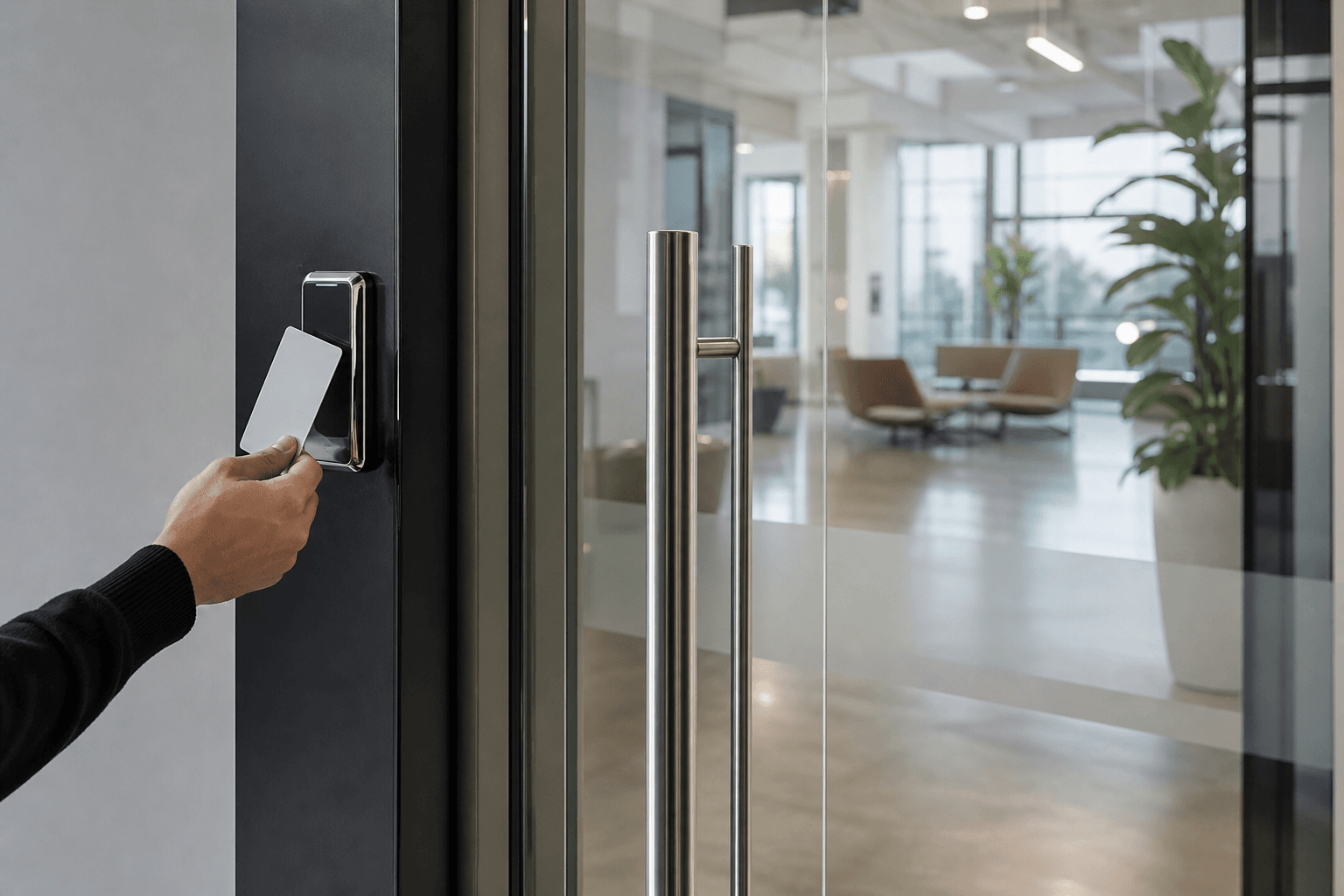
Access control replaces keys with credentials you can issue, restrict and revoke from a screen: cards, fobs, PIN codes or a phone. We survey the doors, specify readers and the electrified hardware that actually holds the door, install and wire the system, program users and schedules, and show your administrator how to run it. The hardware on the door is where most installs succeed or fail, which is why a locksmith should be involved rather than only an IT vendor.
We dispatch across greater Los Angeles, Ventura County, Silicon Valley and the Bay Area; see the city pages for local detail. The dispatch line at (888) 492-0666 is answered around the clock.
What's included
- Door-by-door survey: door and frame type, current lock, how people exit, where power and network are, and whether the opening is fire-rated
- Reader and credential selection: proximity, smart card, keypad, Bluetooth or NFC mobile credentials, or a mix
- Electrified hardware matched to each door: electric strike, maglock, or electrified lever or exit device
- Request-to-exit sensors or buttons, door position switches, and power supplies so the system knows when a door is open or forced
- Controller and software setup: users, groups, time schedules, holidays, door unlock windows and audit reporting
- Administrator walkthrough and a written door schedule showing what was installed where
When you need access control systems
- Frequent staff turnover
- Multi-floor office with separate departments
- Co-working space with member access tiers
- Storefront with after-hours staff entry
- Self-storage or unit-based facility
What to have ready
- Authorization from the business owner or property manager, and in a leased building the landlord's approval for wiring and door modifications
- A list of doors in priority order and a rough headcount of credential holders
- Who in your organization will administer the system and whether you want cloud or on-premises management
- Photos of each door from both sides and of any existing readers, intercoms, panels or power supplies
- Your IT contact if the system will sit on your network or use mobile credentials
Time on site and limits
Typically 90-240 minutes per door for a standalone or first door, including the strike or maglock, reader, exit sensor and wiring to a nearby power supply. Long cable runs through finished ceilings, doors without accessible power, and multi-door systems are scheduled as projects over one or more days.
- The wiring and panels already in the building set what is possible. Reusing an older controller may limit credential types; some legacy readers cannot be upgraded without replacing the panel
- Maglocks on exit doors must release on fire alarm activation and have an exit sensor plus a manual release; that often means coordinating with your fire alarm company and local inspection
- Fire-rated doors need fail-secure electrified hardware that is listed for the opening; a maglock or surface strike is not always permitted on them
- Network, cloud accounts and mobile credential licensing are the system provider's territory; we install and program, but subscription terms are between you and the platform
- Larger multi-door low-voltage projects may involve a low-voltage contractor for cabling; we confirm scope and who does what when quoting
Pricing for access control systems
Door count, the electrified hardware each door needs, reader and credential type, cable run length and difficulty, the controller or cloud platform, and programming time set the price. Credentials themselves and any subscription are listed separately so you can see the ongoing cost.
The dispatcher gives you a range on the phone, and the technician confirms a written quote before any work starts.
Payment is by Cash, Credit Card, Debit Card, Apple Pay and Google Pay, and you receive an itemized receipt listing what was done.
Hardware
- HID Signo, iCLASS SE and ProxPoint readers
- Mobile and cloud platforms such as Brivo, Avigilon Alta (Openpath), Verkada and Kisi
- On-premises controllers such as Keri, DMP and Honeywell
- HES, Adams Rite and Von Duprin electric strikes
- Securitron and Schlage Electronics maglocks
- Altronix and Securitron power supplies
- Bosch and Seco-Larm request-to-exit sensors
Rekeyable locks, keypads or access control?
Rekeyable mechanical locks cost the least per door and work well when turnover is low. Keypad or standalone electronic locks suit a few doors with changing users. Networked access control (cards, fobs, mobile credentials) makes sense when you need to revoke access instantly, log entries or manage many doors; it also needs power, wiring and a plan for free egress. Many buildings end up with a mix: access control on the main entries and rekeyable or restricted cylinders everywhere else.
Where we work
We dispatch across greater Los Angeles, Ventura County, Silicon Valley and the Bay Area; see the city pages for local detail. For access control systems, the city pages list ZIP codes, nearby communities and any local access notes.
Greater Los Angeles includes the San Fernando Valley, the Westside, the South Bay, the San Gabriel Valley, the Gateway Cities, the Santa Clarita Valley and the Antelope Valley. Ventura County includes the Conejo Valley and the coastal cities. In the Bay Area we cover Silicon Valley, the Peninsula and the southern East Bay.
Reach the dispatcher at (888) 492-0666
For access control systems, tell the dispatcher your address and what is wrong. You get an ETA before anyone is sent, a written quote before any work starts and a receipt when it is done. The line is answered around the clock.
One & Only Locksmith is bonded and insured; a certificate of insurance is available on request.